
Your needs, this model
Does it fit your priorities?
Is this the right food format?
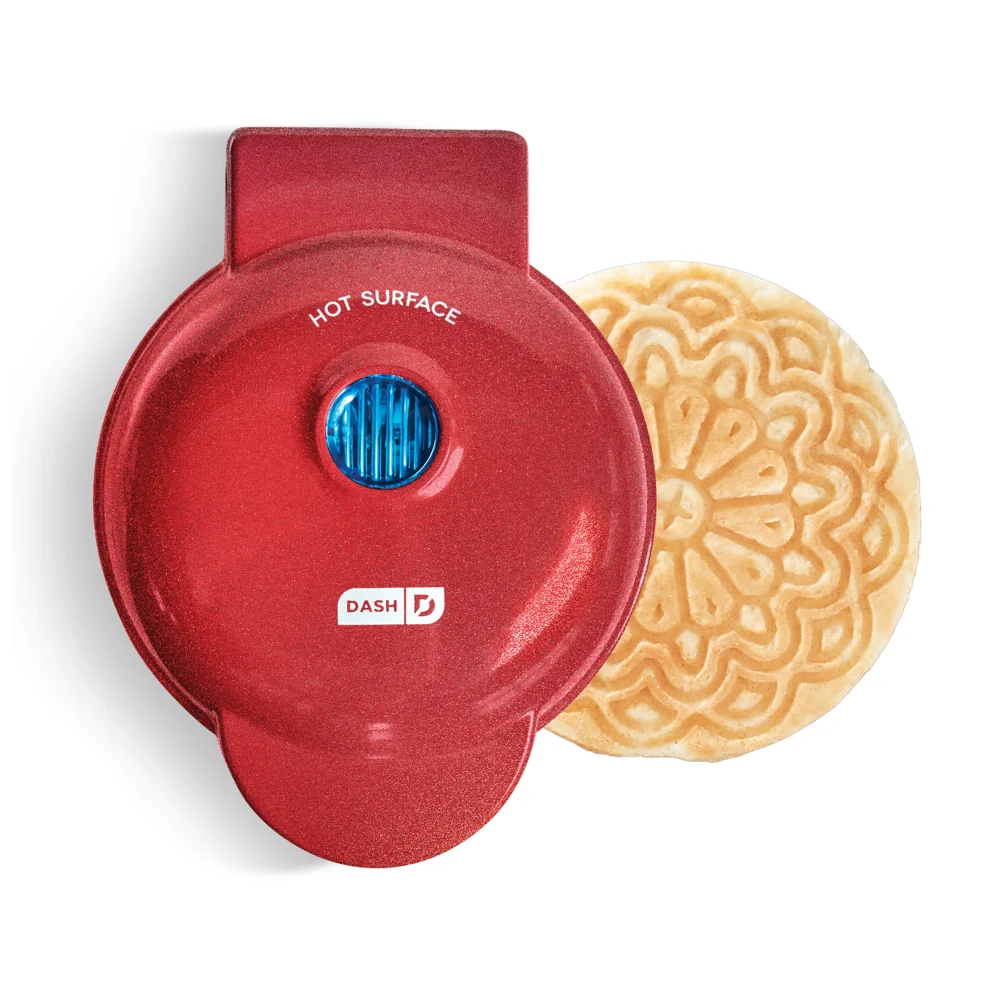
The exact configuration makes pizzelle wafers.
Explore this need in the finder →Can I require a declared ceramic surface?
Ceramic is explicitly declared for this exact model.
Explore this need in the finder →Can it produce at least two independent waffles?
The documented independent cooking position count is 1, distinct from plate faces and divided sticks.
Explore this need in the finder →The Dash DMP001CMR Mini Pizzelle makes a thin patterned wafer with a ceramic nonstick surface. It belongs in a pizzelle or wafer shortlist, rather than a list of deep Belgian breakfast waffles. The patterns on its top and bottom surfaces decorate the two faces of one wafer; they do not establish two independent cookies per fill.
A different food format
Pizzelle are thin wafers rather than thick pocketed waffles. That changes the kind of batter, texture and serving plan you should expect. The maker is useful for a small dessert routine, a patterned cookie plate or the shaped wafer ideas in its recipe guide.
The manufacturer also mentions cannoli and wafer cones in the included recipe guide. Those are shapes made from the cooked wafer using the relevant recipe and handling technique. The appliance is not a deep bowl mold or a chamber that automatically forms a cone while baking.
Understand the two patterns
The current page describes two traditional patterns, one on each cooking surface. That is the upper and lower side of the same cooking position. A shopper who needs several separate pizzelle at once should not treat that wording as a two-cookie capacity claim.
This single-position arrangement suits occasional small batches. It is less useful for preparing a large tray of cookies quickly. If volume matters, look for a model whose exact documentation establishes several independent wafer cavities, rather than counting decorative surfaces.
Material and controls
The named product is explicitly ceramic nonstick. It uses a simple plug-in setup. A numerical countdown, adjustable browning dial and audible finish alarm are not established in the retained current description.
Use the exact supplied recipe and care instructions. Thin wafers can require a different removal and shaping routine from a thick waffle, so a familiar breakfast-waffle method should not be carried over automatically. Stay close to the maker and use utensils appropriate for its coating.
Cleanup and package expectations
The current description does not establish detachable cooking plates or dishwasher washing for the maker. Let it cool and keep the powered body out of water. Check the actual offer for the exact DMP001CMR configuration and included recipe guide; a recipe suggestion does not by itself promise a separate rolling tool.
Best-fit decision
Choose the Mini Pizzelle when thin patterned wafers, a declared ceramic surface and small occasional batches are your priorities. Choose a dedicated cone maker if cone production and a supplied shaping tool are central. Choose a conventional waffle iron when you want a thick breakfast waffle. Settle that food-format decision before comparing cleaning and timing conveniences.
Keep the wafer format separate from a breakfast waffle
The DMP001CMR is relevant to someone intentionally making pizzelle: a thin, patterned wafer rather than a deep, pocketed breakfast waffle. The two designs are the upper and lower faces of one cooking position, so they give the same wafer two finished patterns; they do not mean two cookies are baked simultaneously. The manufacturer’s current page and recipe material describe uses such as cones and cannoli, but the appliance itself does not automatically roll or shape the wafer. Those serving ideas depend on the recipe and on handling the hot wafer with the appropriate shaping method.
That difference should change the shortlist. If your household wants a crisp thin cookie and the single-wafer routine is acceptable, the declared ceramic surface and patterned result give this model a specific role. If you want ordinary thick waffles, compare a dedicated Belgian or mini maker instead. The source does not establish removable cooking plates, so do not choose it for detachable-grid cleanup; use the documented cooled-grid care and keep the powered body dry. As with any specialty maker, consider whether you will use the distinctive format often enough to justify a separate appliance rather than treating pizzelle as an interchangeable waffle shape.
Key details at a glance
| Physical waffle format | A single thin patterned pizzelle wafer with declared ceramic nonstick. |
|---|---|
| Controls and useful differences | Plug-in cooking for one thin wafer with two patterned faces. |
| Plate care | Declared ceramic nonstick; removable cooking grids are not a stated feature. |
Use the exact model’s instructions for operating limits, supplied equipment and version differences.
Sources for this assessment
See which waffle makers fit your routine.
Choose the serving format, care and conveniences that matter.